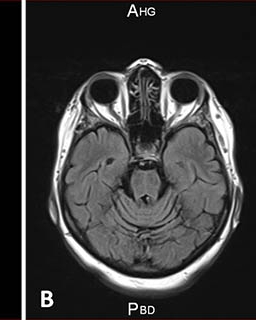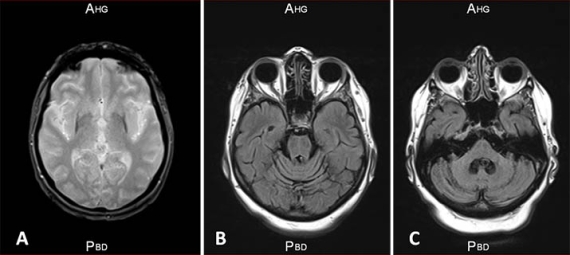
Using data from more than 692 French multiple-system atrophy (MSA) patients, the MSA rare disease reference centre of Bordeaux University Hospital and the biostatistics team of the Bordeaux Population Health Centre have modelled five evolving profiles of patients with different speeds of progression and mortality risks. The aim of the IPPLAMS project is to identify relevant biomarkers to establish a prognosis for this rare neurodegenerative disease, using these five scalable profiles.
Research carried out by team 12 of the Neurodegenerative Diseases Institute of Bordeaux University Hospital.
Biomarkers such as certain specific zones of cerebral atrophy or the concentration of neurofilaments in cerebrospinal fluid are likely to be significant.
Analysing the correlations between these five evolving profiles and targeted biomarkers should allow physicians to give patients prognostic information based on a brain MRI, a blood test and a lumbar puncture. The results will also make it possible to refine clinical trials for this rare disease.
This project is led by neurologist and doctor of epidemiology Alexandrea Foubert-Samier and her team, in partnership with Cécile Proust-Lima, doctor of biostatistics at INSERM, from the Biostat team at Bordeaux Population Health Centre.
MSA is a rare neurodegenerative disease with median survival of between six and ten years, for which there is no treatment to slow down the inevitable progression of the illness. Patients with MSA show a wide range in the progression of symptoms, representing a challenge in giving prognostic advice and an obstacle to developing neuroprotective treatment strategies.